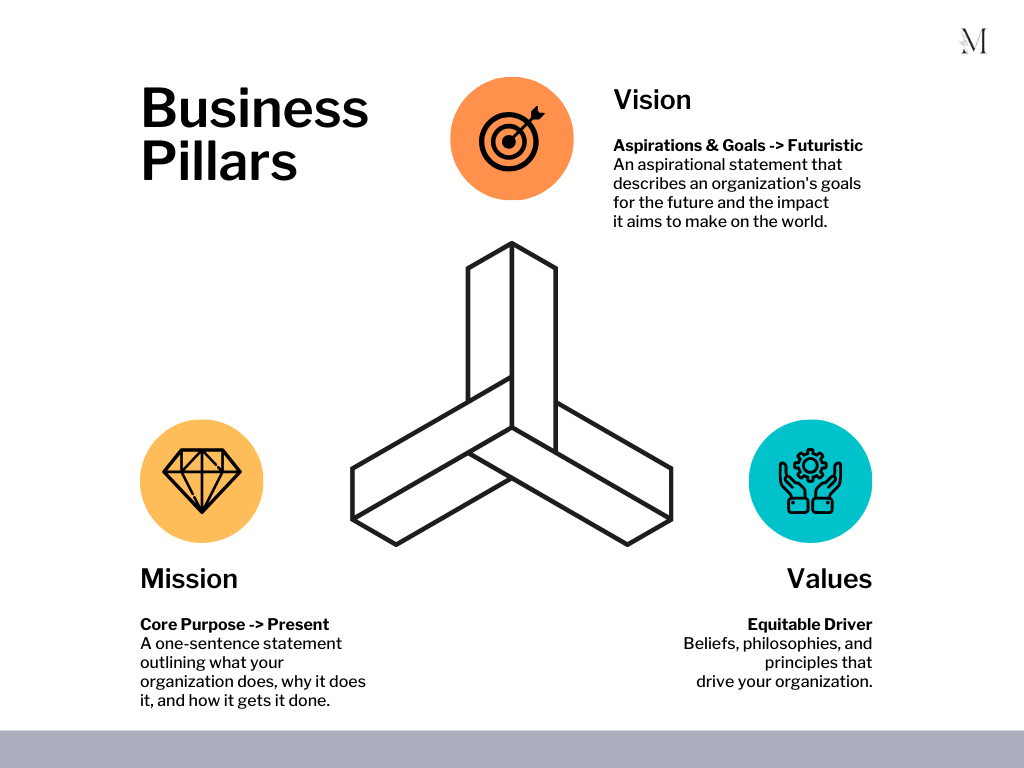
A vision statement is a crucial component of product management and business strategy. It is an aspirational statement that describes a company’s goals for the future and the impact it aims to make on the world. A company’s vision statement contains its goals for the business, its employees, and customers. It serves as a concise, inspirational description of the long-term direction and purpose of a product, company, or an organization. A well-crafted vision statement provides clarity and motivation for all stakeholders and guides decision-making and goal setting.
Here’s a breakdown of some tips you could consider in creating a professional vision statement:
- Start with a clear understanding of your company’s mission. The company’s mission statement explains its overall purpose. What is your company’s purpose? What are you trying to achieve? Once you have a clear understanding of your mission, you can start to craft a vision statement that aligns with it.
- Be aspirational. Your vision statement should be something that your company can strive for. It should be something that inspires your employees and customers.
- Be specific. Your vision statement should be specific enough to give your company direction, but not so specific that it limits your company’s ability to grow and change.
- Be memorable. Your vision statement should be something that people can remember and repeat. It should be short, concise, and easy to understand.
- Be relevant to your target audience. Your vision statement should be something that resonates with your target audience. It should be something that they can relate to and get excited about.
- Be achievable. Your vision statement should be something that your company can realistically achieve. It should not be impossible or unattainable.
- Be time-bound. Your vision statement should have a timeline. When do you want to achieve your vision? Having a timeline will help you stay focused and motivated.
- Be flexible. Your vision statement should be flexible enough to adapt to change. The world is constantly changing, and your company needs to be able to change with it.
- Be measurable. Your vision statement should be something that you can measure. How will you know when you have achieved your vision? Having measurable goals will help you track your progress and adjust as needed.
- Be reviewed regularly. Your vision statement should be reviewed regularly to ensure that it is still relevant and achievable. As your company grows and changes, your vision statement may need to be updated.
- Align with Core Values. Ensure that the vision statement aligns with the core values and principles of your product or company. It should reflect what you stand for and the culture you want to foster.
The following questions can help you clarify your vision:
- Where do we want the organization to go
- What can we realistically achieve
- What problem does the organization intend to solve
- What are the changes we believe the organization can make for individuals? For the industry
- How will things be different if the vision is realized
- What phrases or keywords describe the type of organization and outcome we want
Vision statements can take on various forms depending on the nature and objectives of an organization or entity. Some companies have multifaceted vision statements that may encompass elements of several types. Additionally, vision statements can change over time as a company’s goals and strategies evolve.
The best type of vision statement for a company will depend on the company’s specific goals and objectives. However, all vision statements should be clear, concise, and inspiring and should be aligned with the company’s mission and values.
There are many different types of vision statements, but they can generally be classified into two categories:
- Product-focused vision statements: These vision statements focus on the company’s products or services.
- Customer-focused vision statements: These vision statements focus on the company’s customers and the needs that the company seeks to meet.
Some vision statements are based on concepts of what the company hopes to be or achieve in the future. This can be a general statement focused on customers, or a position the company wants to hold within the industry. Other common vision statements are focused on internal goals. These include the type of products and services the company hopes to provide as they grow. Quality-based vision statements can also relate to company culture and operations, outline the company’s desired outcome, or communicate intentions and hopes for the future.
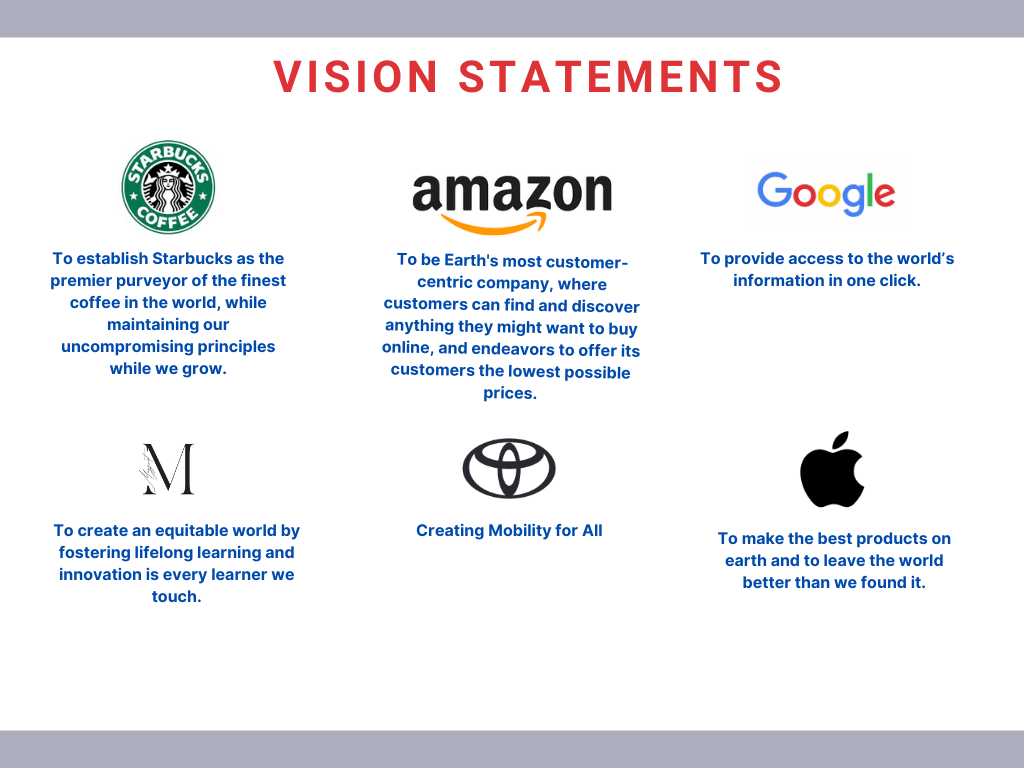
Here are some examples of different types of vision statements
What’s a mission statement?
The company’s mission statement explains its overall purpose and what it does in the present. It is a one-sentence statement outlining what your company does, why it does it, and how it gets it done. For example, a company may have a mission of creating more sustainable business practices within a certain industry. Mission statements are typically action-oriented, brief, and powerful while helping to outline what the company hopes to accomplish.
What’s a value statement?
A company’s values are the core principles that help guide it toward its vision and help it complete its mission. For example, a company that sees itself going carbon-neutral within 10 years may embody the values of sustainability and community.The company values act as a moral guideline for the behaviors and actions of the business and its employees
The best type of vision statement for a company will depend on the company’s specific goals and objectives. However, all vision statements should be clear, concise, and inspiring and should be aligned with the company’s mission and values. A vision statement identifies a company’s long-term goals, while a mission statement explains how you will achieve them.
To have a vision is to imagine a better future by taking an educated guess. To have a strategy is to have list of steps that you should take to accomplish your goals for the vision. Vision should not remain the same forever and should be constantly evaluated against the market competitions.
 Maygnet